Our next big trek
Everest
Base Camp
Why it keeps coming up
Not just a finish line—a journey we could share.
The classic approach begins and ends at Lukla, winding through Namche Bazaar, Tengboche and the Khumbu landscape, with time to acclimatise along the way.
The part worth dreaming about is not only reaching base camp. It is the long walk together: early starts, shared tea-house tables, changing mountain views and the stories we would bring home.
No Peak Pursuit memories exist here yetWhere we are
Getting ready for April 2027.
2 of 8 settled.
Who’s going
Srijan and Zaibi.
When
April 2027, the spring window.
Exact dates
Pick the days, with spare ones for Lukla weather.
Route and rest days
Settle the rough itinerary below, both acclimatisation days included.
Guide and permits
Choose licensed local support; check TIMS and Sagarmatha National Park requirements.
Flights
Kathmandu, then Lukla both ways, with room for delays.
Insurance
Cover for high-altitude trekking and helicopter evacuation.
Getting ready
Training, and medical advice for each of us.
What we know so far
Only the useful bits for now.
These are research notes for friends. Every estimate gets checked again as we firm up the dates.
When might be comfortable?
The commonly researched windows are April–May and October–November. We’ve chosen April 2027; the exact dates are still open.
How hard would it feel?
Challenging, sustained high-altitude walking. This is a trek to base camp, not a technical summit climb.
How much time would we need?
Roughly 13 trail and travel days, plus about 2 breathing-room days for weather or flight delays.
How far is it?
Roughly 120–130 km return, depending on acclimatisation walks and the route we eventually choose.
How high does it go?
Base camp is about 5,364 m. Kala Patthar, an optional side walk, reaches about 5,545 m.
A possible journey
The rough shape of thirteen days.
This is here to help us picture the experience, not to act as a final itinerary.
Kathmandu
Arrival, group briefing and equipment review. Nothing booked.
Kathmandu → Lukla → Phakding
Flight to Lukla, then an introductory walk to Phakding.
Phakding → Namche Bazaar
Follow the Dudh Koshi valley and enter Sagarmatha National Park.
Namche acclimatisation
Remain based in Namche with a conservative acclimatisation walk.
Namche → Tengboche
Continue through the Khumbu landscape toward Tengboche.
Tengboche → Dingboche
Ascend through Pangboche toward Dingboche.
Dingboche acclimatisation
Second acclimatisation day; the exact side walk depends on conditions.
Dingboche → Lobuche
Continue to Lobuche beside the Khumbu Glacier moraine.
Lobuche → Gorak Shep
Reach the final settlement; optional Kala Patthar only if conditions and acclimatisation allow.
Everest Base Camp → Pheriche
Visit base camp, then descend to Pheriche rather than sleeping higher.
Pheriche → Namche
Continue the descent to Namche Bazaar.
Namche → Lukla
Return to Lukla on foot.
Lukla → Kathmandu
Weather-dependent return flight. Add contingency days before onward travel.
Destination references
What the route can look like.
Creative Commons reference photographs from Wikimedia Commons. These are not photographs of a Peak Pursuit trip.
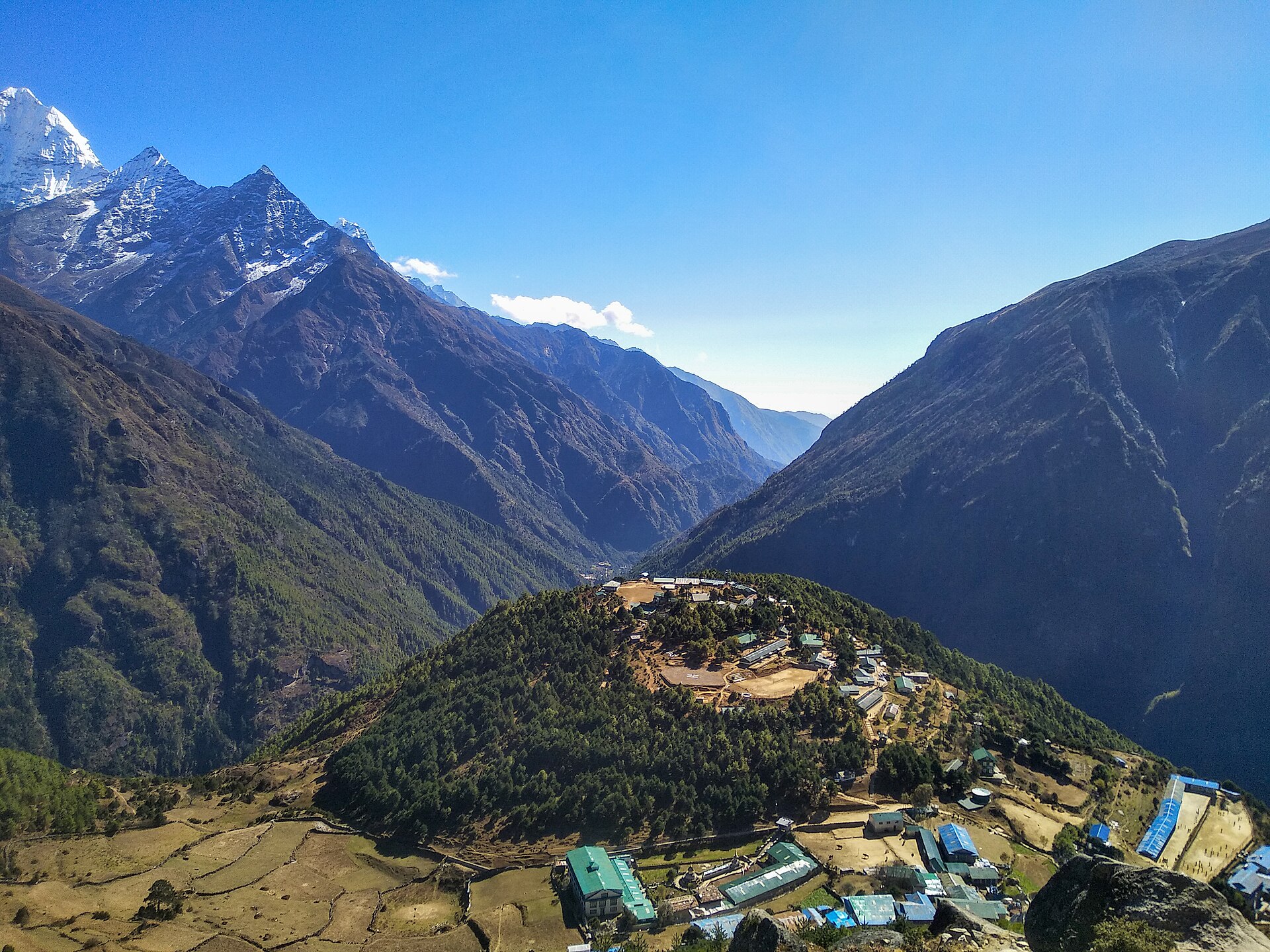
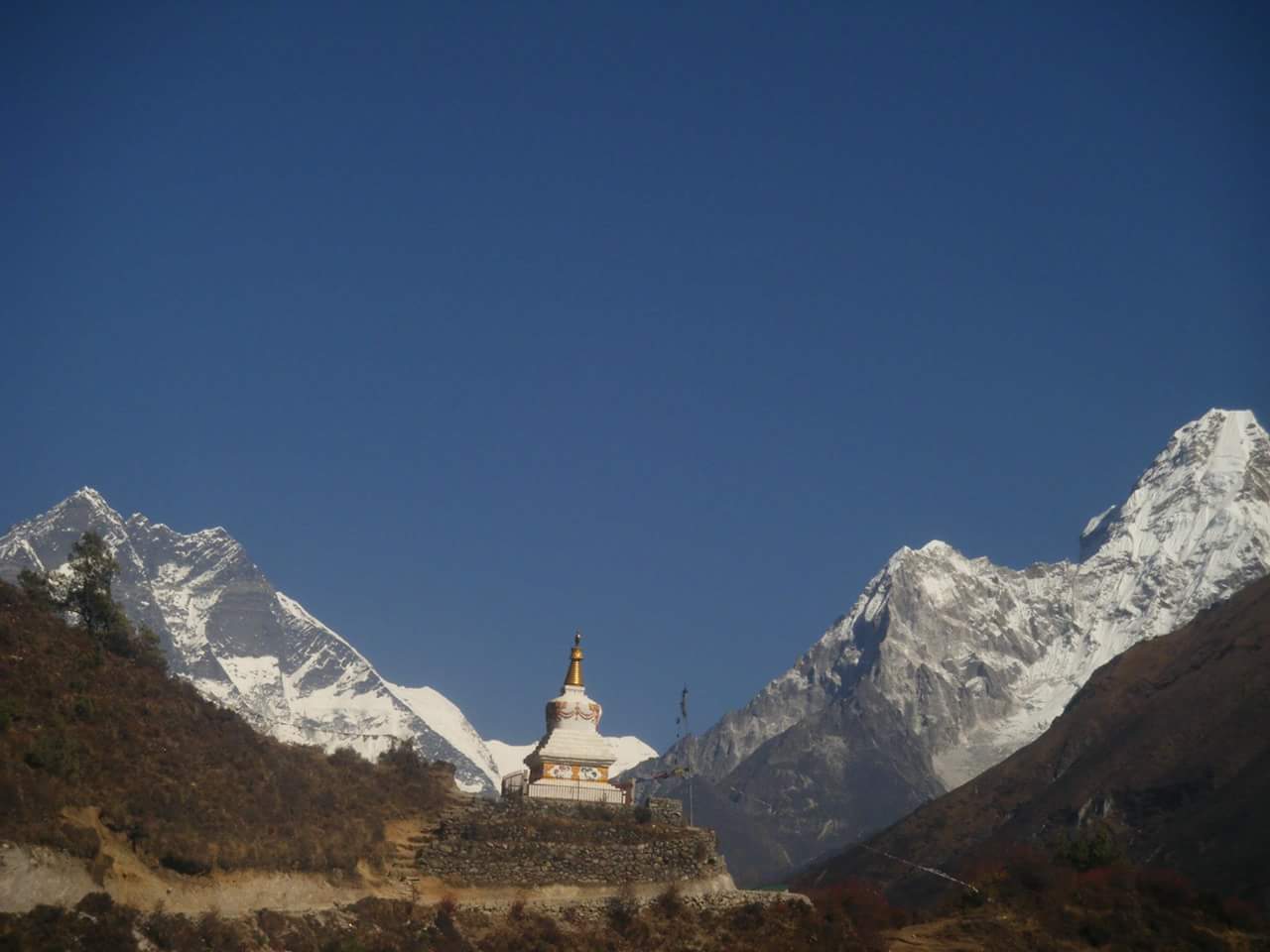
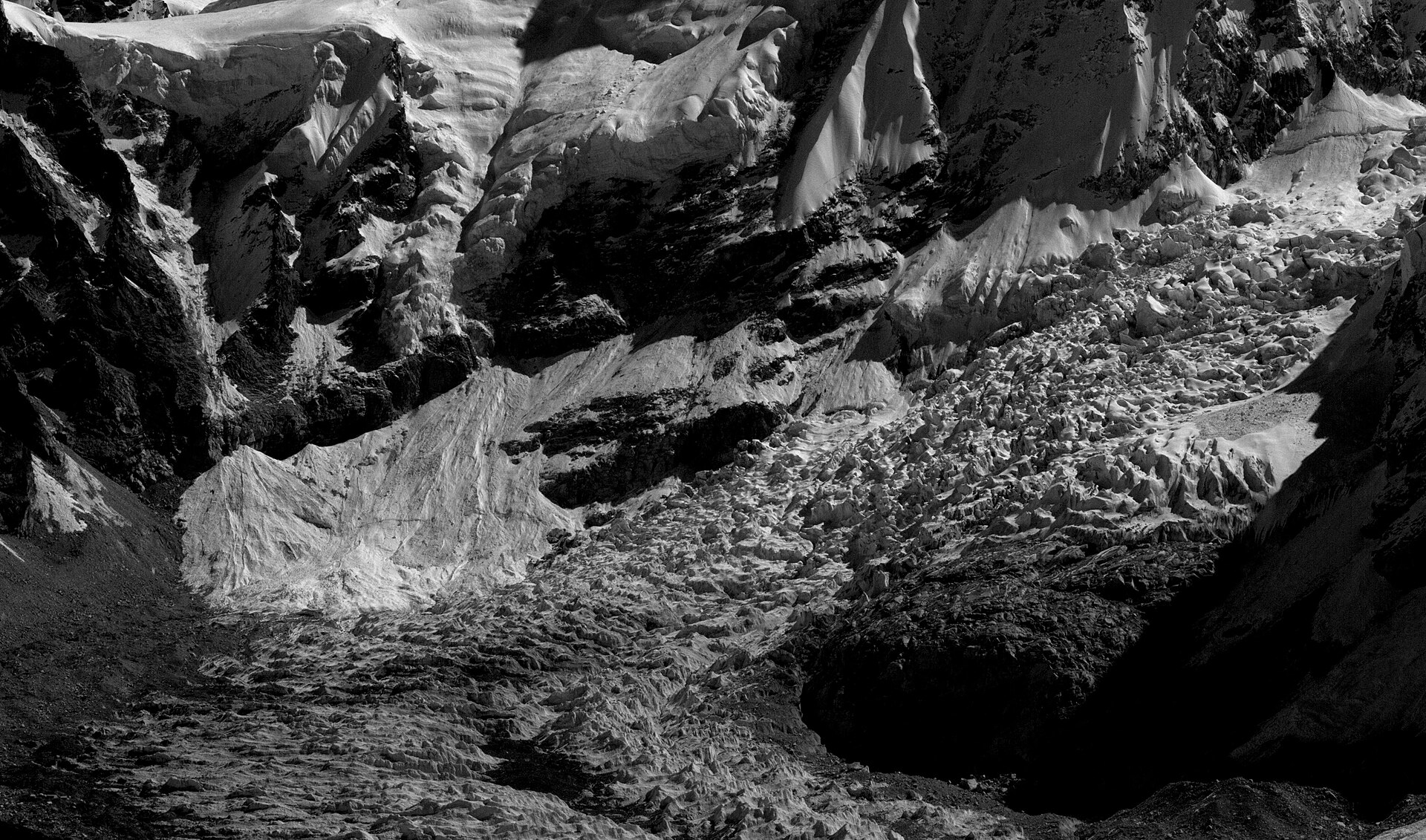
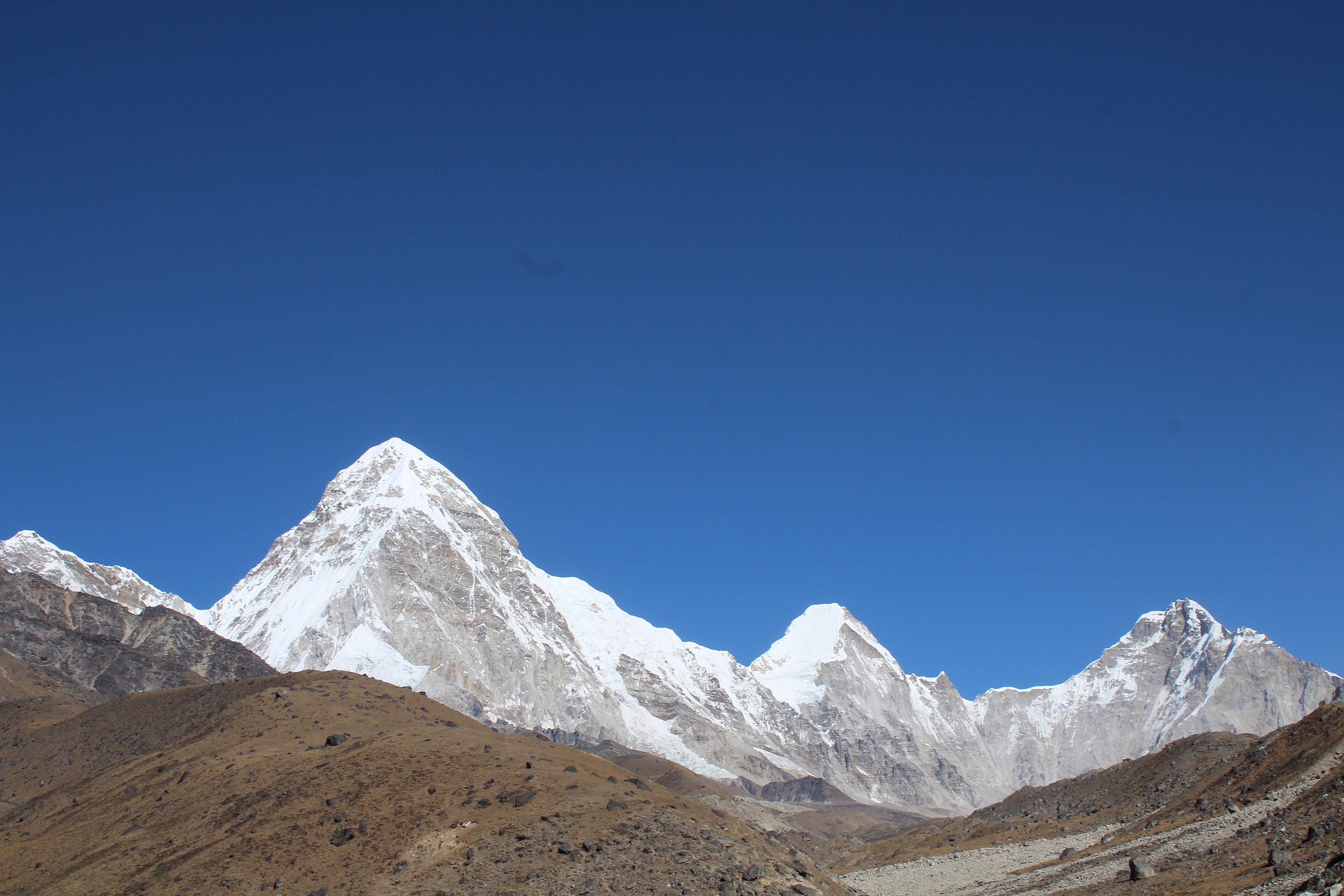
Everest Base Camp view: Shivaexcursion16 · Namche Bazaar: Rohit Sharma · Tengboche: Bijayaparajuli · Khumbu Glacier: Markrosenrosen. Licensed CC BY-SA; source and licence pages are linked below.
Still to talk through
Questions for whoever comes along.
Who is genuinely excited?
Add friends’ names only after they say they are happy to be listed.
What pace suits us?
Talk honestly about fitness, altitude experience, rest days and how the group likes to walk.
When could we all go?
Compare seasons, leave from work, family commitments and enough time for delay days.
What would make it enjoyable?
Discuss small-group size, room comfort, food needs, photography time and the moments people care about.
Things we would take seriously
Looking after one another comes first.
This trek reaches elevations where acute mountain sickness can become life-threatening. Acclimatisation matters; worsening symptoms mean no further ascent, and suspected severe illness requires urgent descent and qualified medical support.
Local guidance and permits
Use appropriately licensed local support and re-check current TIMS, local and Sagarmatha National Park requirements.
Medical preparation
Every participant should obtain individual medical advice, disclose relevant conditions and understand altitude-illness warning signs.
Insurance and evacuation
Require insurance that explicitly covers high-altitude trekking and helicopter evacuation at the planned maximum altitude.
Weather and flights
Lukla flights are weather-dependent. Protect onward travel with contingency days and a documented disruption plan.
Trail boundaries
The idea is to trek to base camp. It does not include climbing Everest or entering the Khumbu Icefall.
Where this idea came from
Useful reading for curious friends.
Information reviewed 16 July 2026. Regulations, fees, flights and trail conditions can change. These are shared research notes, not professional medical, mountaineering or travel advice.